
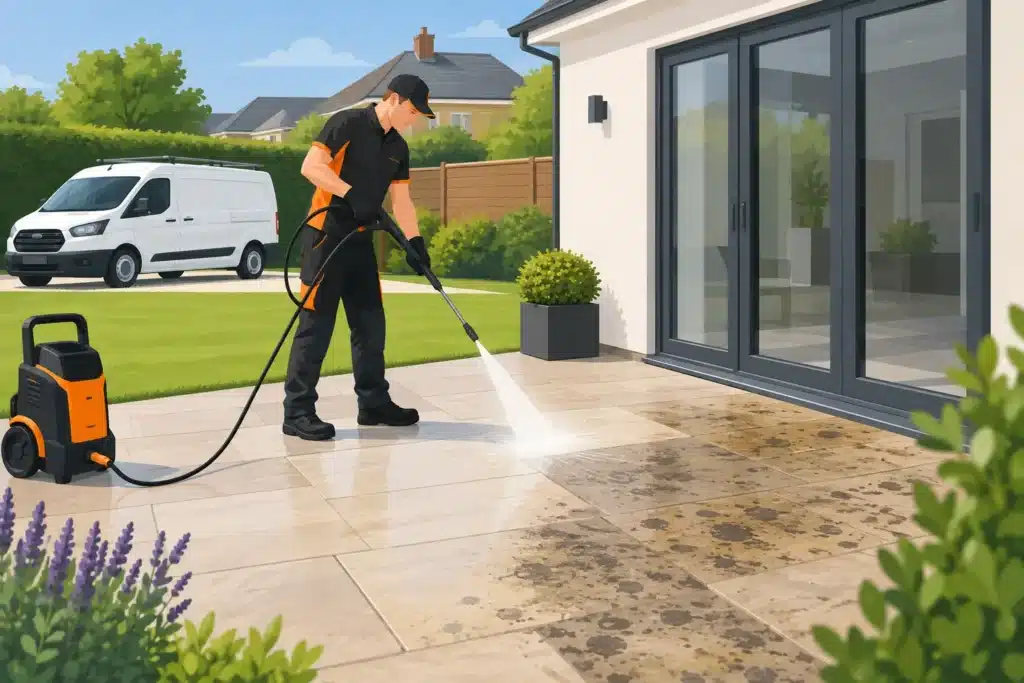

Those stubborn dark marks that remain after rain are one of the most common reasons homeowners consider pressure washing patio black spots. They can make otherwise sound paving look uncared for, particularly on shaded paths, north-facing gardens and patios beneath trees. The good news is that most marks can be improved significantly. The important part is identifying what they are before using more pressure than the surface can safely take.
A patio does not need to look brand new to be clean, but it should look consistently maintained. A careful clean can lift years of surface grime, restore the original colour of paving and make the area more pleasant to use. Done badly, however, pressure washing can strip jointing material, damage softer stone and leave a patchy finish that attracts dirt again quickly.
What causes black spots on patio paving?
Not every black mark has the same cause, so there is no single setting or treatment that suits every patio. In West Yorkshire, regular rainfall, damp conditions and shaded gardens give organic growth plenty of opportunity to settle into porous paving.
The marks may be a mixture of algae, mould, mildew, lichen and ingrained dirt. Black lichen is often the most stubborn. It forms small, hard spots that grip tightly to the surface, especially on concrete slabs, block paving and textured paving stones. Ordinary rinsing rarely shifts it, and even a pressure washer may only remove the visible surface at first.
Dark staining can also come from leaf tannins, soil, barbecue residue, vehicle deposits near driveways or water running repeatedly across the same area. If the patio has poor drainage, puddles keep the surface damp and can encourage growth to return sooner after cleaning.
Why some spots stay after a first clean
A clean patio can still show faint marks once it dries. This does not always mean the work has failed. Deep-rooted lichen and staining may need a suitable treatment, time to work and, in some cases, a second controlled clean. Trying to remove every trace in one aggressive pass is where damage tends to happen.
The result also depends on the paving itself. Older concrete slabs may have permanent variation in colour, while natural stone can contain veins, fossils and marks that are part of the material rather than surface dirt. A professional should set realistic expectations rather than promise that every patio will look identical to the day it was laid.
Is pressure washing the right answer for patio black spots?
Often, yes – but pressure is only one part of the job. A good clean combines the right water flow, nozzle, working distance and method for the condition of the paving. The aim is to remove contamination without scarring the surface or blasting out the joints.
For durable concrete paving and block paving in sound condition, pressure washing can be very effective at lifting surface dirt and organic growth. It is particularly useful across larger areas where hand scrubbing would take considerable time. The work should be steady and even, rather than concentrated on one small mark until the paving looks lighter than the slabs around it.
Softer materials need more caution. Sandstone, limestone, old paving, damaged slabs and loose pointing can be vulnerable to high pressure. Natural stone is not automatically unsuitable for cleaning, but it must be assessed properly. A harsh approach can roughen the face of the stone, increase its porosity and make future staining more likely.
It also depends on the condition of the joints. If the sand or mortar is already loose, pressure washing may expose that weakness. Replacing lost jointing material after cleaning is sometimes necessary, especially with block paving. That is a normal part of restoring a stable, tidy finish, not something to ignore.
How professional patio cleaning avoids common damage
The machine matters less than how it is used. High pressure close to the surface may appear to produce fast results, but it can leave visible lines, chip edges and remove more material than intended. A measured technique produces a more even result and protects the life of the patio.
Before work begins, the area should be checked for loose slabs, cracked paving, failing mortar, delicate stone and drainage problems. Furniture, pots and loose items need moving where practical, while nearby walls, doors, windows and planting should be treated carefully. Water and debris can travel further than expected, particularly across uneven ground.
The cleaner should work methodically across the patio, overlapping passes to avoid striping. Stubborn black spots may be treated with an appropriate patio-cleaning product where suitable, rather than relying solely on force. Any product used needs to be chosen for the paving material and handled carefully around lawns, borders, pets and drainage.
After cleaning, the patio needs time to dry before its final appearance is judged. Wet slabs can look darker than they will once dry, and small remnants of lichen may become less noticeable over the following days as the treatment continues to work.
Do not overlook drainage and shade
If black spots return quickly, the problem may not be the cleaning itself. Water that sits on a patio after rainfall, overflowing gutters, dripping downpipes and dense overhanging vegetation can all keep paving damp for too long. Addressing the cause will usually make the clean last longer.
You may not be able to change a north-facing patio, but small improvements help. Clearing leaf litter promptly, keeping drains and channels free-flowing, and trimming back vegetation where appropriate lets more air and daylight reach the surface. These routine jobs reduce the organic material that feeds algae and lichen.
Can you pressure wash a patio yourself?
For a small, modern patio in good condition, a homeowner may be comfortable carrying out light cleaning with suitable equipment and care. Start conservatively, test an inconspicuous area and keep the nozzle moving. Never assume the highest setting is the best setting.
The risks increase when paving is old, uneven, soft, heavily stained or already damaged. It is also sensible to seek help if the patio includes fragile stone, extensive black lichen, loose joints or awkward areas near glazing, doors and planted borders. A rushed weekend clean can create repairs that cost more than the original cleaning job.
Avoid using a pressure washer on unstable slabs or directing water towards air bricks, door thresholds or electrical fittings. Wear suitable footwear with grip, as the surface can become slippery, and keep children and pets away from the working area. Patio cleaning is ground-level work, but it still requires sensible preparation.
Keeping black spots from coming back
A patio will always collect some dirt outdoors, particularly through autumn and winter. The goal is not constant cleaning. It is keeping on top of the conditions that allow black spots to establish.
Sweep leaves, soil and moss from the surface before they break down into damp debris. Deal with standing water rather than simply washing over it, and clear gutters or downpipes that repeatedly discharge onto the same slabs. Light, regular upkeep is easier on the paving than waiting until the whole patio is dark and slippery.
For some surfaces, sealing may be worth considering after the patio is fully clean and dry. It can help reduce absorption and make future maintenance easier, but it is not right for every material. The wrong sealant, or sealant applied to damp paving, can alter the appearance and cause problems of its own. This is another area where the type and age of the patio matter.
When to arrange professional pressure washing
It is worth arranging professional help when black spots cover a large area, the paving has not been cleaned for several years, or you are unsure how the material will respond. The same applies if weeds, loose sand, blocked drainage or staining from other sources are part of the picture.
For homeowners in Leeds and across West Yorkshire, Morrells Window Cleaning provides exterior pressure washing as part of a practical property-maintenance service. The focus should be on a clean, even result and clear communication about what the patio needs – no guesswork and no unnecessary damage.
A well-cleaned patio changes how the whole garden feels. Treat the black spots early, use the right method for the paving, and the space is far easier to keep looking cared for through the seasons.