
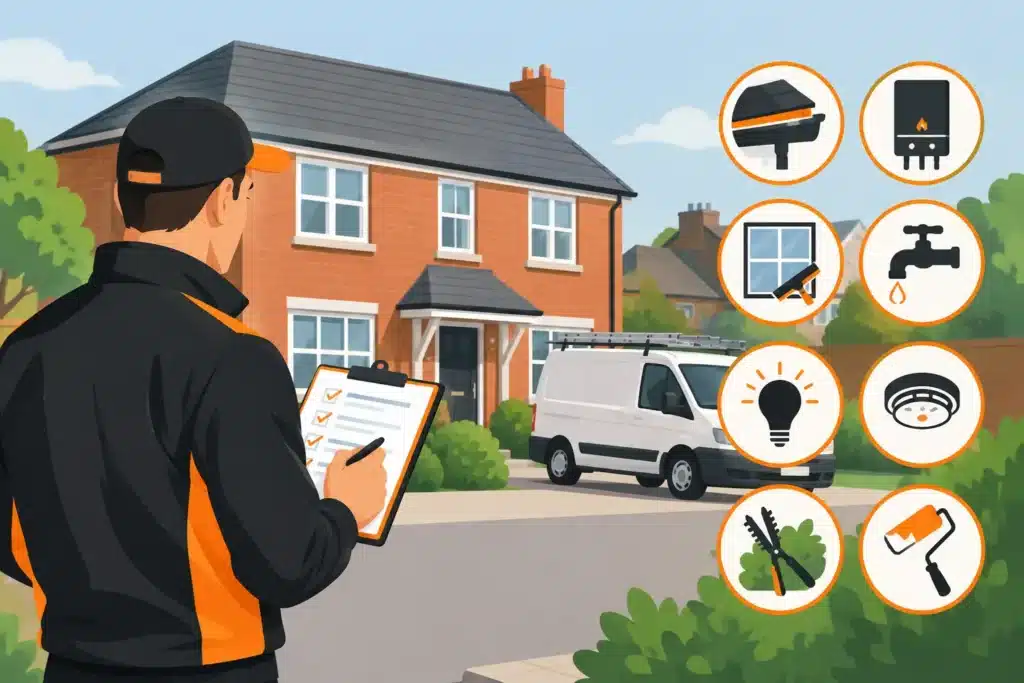

A missed gutter clean, a loose fence panel or a boiler service left until autumn can quickly become more than a small job. For landlords, a clear landlord maintenance schedule turns property care from a stream of reactive calls into planned work that protects the building, supports tenants and makes costs easier to manage.
The aim is not to inspect every inch of a property every week. It is to know what needs regular attention, when it is most sensible to do it, and who is responsible for reporting or arranging it. That means fewer surprises for everyone.
Why a planned schedule matters
A rental property is exposed to wear from everyday use, weather and changing seasons. Small issues are often cheaper to deal with early: a blocked gutter can lead to overflowing water, damp patches and damage to external finishes; a leaking tap can affect a kitchen unit or floor; a failed extractor fan can allow condensation to build up.
A schedule also creates consistency. Tenants know when access may be needed, contractors can be booked before the busiest periods, and landlords have a simple record of work completed. This is particularly useful if you manage more than one property or work with an agent.
There is a balance to strike. Regular checks should protect the property without making tenants feel constantly monitored. Planned communication, reasonable notice and a clear explanation of the work go a long way.
Build your landlord maintenance schedule around four areas
Start by separating legal and safety obligations from routine upkeep. Safety checks have fixed requirements or recommended inspection intervals, while cosmetic and preventative jobs can be planned around the condition of the property and the season.
Safety and compliance
Keep a separate diary for gas safety, electrical inspections, smoke and carbon monoxide alarm responsibilities, and any licensing conditions that apply to the property. In England, gas appliances supplied by the landlord require an annual safety check by an appropriately registered engineer. Electrical installation condition reports are generally required at least every five years in privately rented homes, although remedial work or an electrician’s recommendation may mean action is needed sooner.
Requirements can change, and local licensing conditions may add further responsibilities. Check the current rules for your property rather than relying on an old checklist. Record dates, certificates, recommendations and completed repairs in one place.
Internal condition and repairs
Plan a routine property inspection at sensible intervals, often every three to six months depending on the tenancy and the condition of the home. This is a chance to identify developing issues, not a reason to search for minor faults.
Look for signs of leaks beneath sinks, around toilets and near appliances. Check seals around baths and showers, test that extractor fans are operating, and note cracked tiles, damaged flooring or sticking internal doors. Ask tenants in advance if there are repairs they want to raise so that one visit can deal with several matters where possible.
Tenants should report faults as soon as they notice them, especially leaks, electrical concerns, heating problems, loose handrails or anything affecting security. Make it straightforward for them to do so and acknowledge reports promptly. A schedule helps with planned maintenance, but it should never delay an urgent repair.
Exterior fabric and drainage
External maintenance is easy to postpone because the property may look acceptable from the pavement. Yet water is often the source of the most expensive avoidable damage. Check roofs from ground level for obvious slipped or damaged tiles, inspect render and brickwork for cracks, and keep an eye on pointing, external seals and drainage.
Gutters and downpipes need particular attention in leafy areas or where trees overhang the building. A blocked gutter can overflow into walls and soffits long before anyone inside notices a problem. Clearing is commonly arranged once or twice a year, with an additional check after heavy leaf fall where needed. This is not work for an untrained person on a ladder or roof. Use a competent exterior cleaning or maintenance provider with suitable equipment for the task.
Windows, frames and sills also benefit from routine cleaning. Clean glass improves the presentation of a rental home, but the more practical benefit is visibility: regular cleaning makes deteriorating seals, damaged frames and blocked drainage channels easier to spot. Frequency depends on the setting. A town-centre property, roadside home or building near trees may need more frequent attention than a sheltered property in a quieter location.
Gardens, boundaries and shared spaces
Be clear about what the tenancy agreement says regarding gardens, paths, fences, sheds, gates and shared areas. A tenant may reasonably be expected to carry out basic garden care, while structural repairs, unsafe paving, boundary failures and major pruning are usually matters for the landlord.
Check paths, steps and handrails for trip hazards, particularly before winter. Make sure gates close properly, external lights work where provided, and bins or communal areas are not creating access problems. At flats or houses in multiple occupation, responsibilities may be split between the landlord, managing agent and freeholder, so keep those arrangements documented.
A seasonal plan that works in West Yorkshire
A calendar makes maintenance easier to manage, but it should remain flexible. A wet spring, a windy autumn or a period of freezing weather may bring work forward.
- Spring: Inspect external walls, fencing, paths and drainage after winter. Book gutter clearing if debris has built up, check for leaks or water staining indoors, and deal with minor exterior repairs before they worsen.
- Summer: This is often the most practical period for external repairs, repainting where needed and planned cleaning. Check ventilation in kitchens and bathrooms, particularly in properties that have had condensation concerns.
- Autumn: Clear gutters and downpipes after leaf fall, check that drains are flowing freely, and make sure heating is serviced or checked at the appropriate time. Look at external lighting, gates and paths before darker, wetter evenings arrive.
- Winter: Prioritise heating, water ingress, frozen pipes and safe access. Encourage tenants to report problems early. Avoid non-essential disruptive work where weather conditions make it impractical, unless it is necessary to protect the property or occupants.
For homes in Leeds and across West Yorkshire, wind-driven rain, leaf fall and cold snaps make drainage and external condition worth watching closely. The exact timing matters less than acting before the next poor-weather period exposes a known weakness.
Set up a simple system, not a complicated spreadsheet
A maintenance schedule only works if it is easy to use. Create one record for each property with the key dates, contractor details, certificates, inspection notes and photographs of significant work. Set reminders well ahead of annual obligations, rather than on the due date itself.
For recurring jobs, decide the frequency after considering the property rather than choosing one rule for every address. Gutter clearing may need to be more regular near mature trees. Window cleaning may be planned more frequently for a commercial frontage or a property where presentation is especially important. Pressure washing is usually condition-led, as slippery paths or heavily soiled surfaces may need attention sooner than a clean, well-drained area.
If you use contractors, agree how appointments and updates will be handled. Tenants should not be left to chase an unknown tradesperson or wonder whether someone is due to attend. Confirm the visit in advance, provide contact details where appropriate, and let them know once work has been completed.
For exterior cleaning, a scheduled provider can remove one more task from the diary. Morrells Window Cleaning, for example, arranges regular visits with advance notifications, helping landlords maintain windows, frames and sills without repeatedly organising access or payment.
Keep records that are useful when you need them
Good records are not just for compliance. They help you see patterns. If the same window is repeatedly leaking, or a bathroom keeps developing mould despite repairs, you have a clearer basis for investigating the underlying cause rather than paying for the same temporary fix.
Keep dated notes of reported issues, your response, contractor findings and invoices. Take photographs before and after substantial work, and record any agreed tenant responsibilities in writing. If an inspection identifies a concern, state what will happen next and when. This reduces uncertainty and shows that the property is being managed properly.
Make maintenance easier for tenants to report
Tenants are often the first people to notice a change in the property, but they may delay reporting it if they expect a difficult conversation or a slow response. Give them one clear route to report maintenance and explain what information is helpful: the location, when the issue began, photographs where safe to provide them, and whether it is getting worse.
It also helps to explain the difference between urgent issues and planned jobs. A significant leak, loss of heating in cold weather, insecure external door or electrical fault needs prompt attention. A mark that needs repainting or a stiff cupboard hinge can usually be grouped into a planned visit. Both matter, but they do not need the same response.
The best landlord maintenance schedule is the one that is reviewed and adjusted as the property changes. Keep the essentials diarised, inspect before small defects grow, communicate clearly and use suitable professionals for specialist or height-related work. That steady approach keeps a property safer, better presented and far less likely to create a last-minute problem for you or your tenants.