
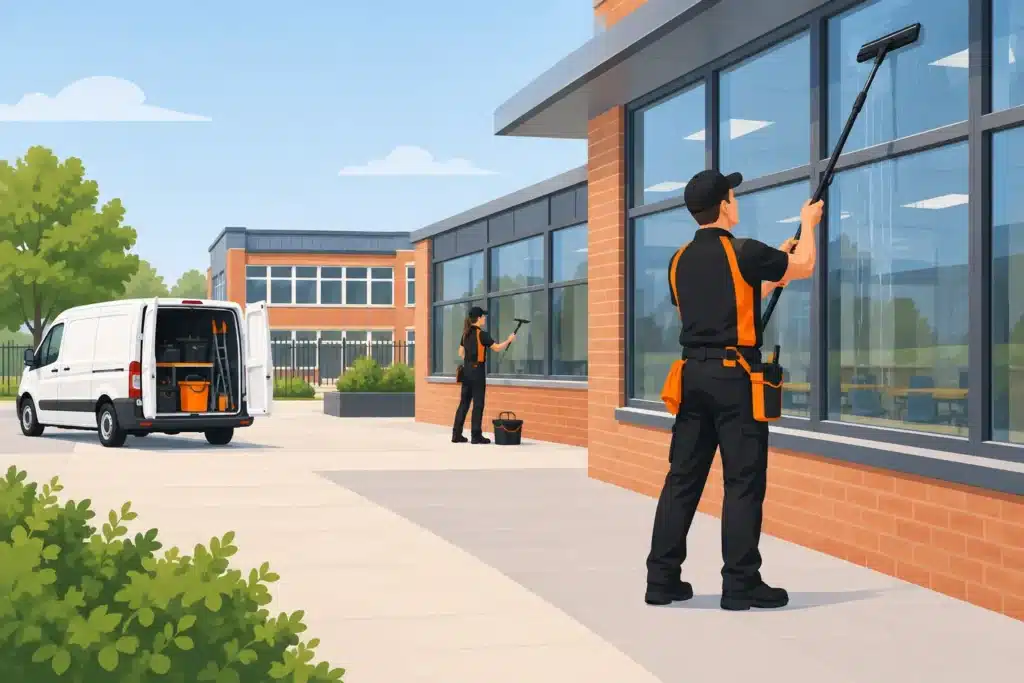

A school can be well run, welcoming and carefully maintained, yet still look tired when windows are marked by rain, traffic film and fingerprints. School window cleaning is not simply a cosmetic task. It needs to fit around pupils, staff, visitors, safeguarding procedures and the practical reality of a busy site.
For schools across Leeds and West Yorkshire, the right arrangement is one that runs to a clear schedule, causes minimal disruption and does not create extra work for the office or site team. No chasing for arrival times, no uncertainty over which areas have been completed, and no last-minute decisions during the busiest part of term.
Why clean windows matter on a school site
Clean glass makes the most of natural light in classrooms, halls and reception areas. That can make a noticeable difference in spaces used throughout the day, particularly during darker months. It also helps the building present well to prospective families, governors, contractors and visitors.
There is a maintenance point too. Over time, dirt, algae, bird mess and airborne residue can build up on glass, frames and sills. Regular cleaning keeps this visible build-up under control and gives the exterior a more consistently cared-for appearance. It is not a substitute for repairs, but it can make it easier to spot issues such as damaged seals, cracked panes or overflowing gutters that need attention from the appropriate contractor.
The frequency required depends on the building and its surroundings. A school near a main road, trees or open playing fields may need more regular attention than a smaller site in a sheltered location. Entrance areas and front elevations often need a different standard of presentation from less visible blocks.
School window cleaning needs a site-specific plan
A school is not an ordinary commercial property. The cleaning method, access arrangements and timing should be agreed before the first visit, rather than worked out at the gate on the day.
Safeguarding and controlled access
Any external contractor should follow the school’s visitor process. That may include signing in, wearing identification, reporting to reception and working only in agreed areas. The school should be clear about who will be on site, when they are expected and who the day-to-day contact is if access changes.
This matters particularly where cleaners will be working near playgrounds, entrances or classroom windows. A planned service allows the school to choose suitable timings, such as outside drop-off and collection periods, break times or events. It also avoids site staff having to leave their usual work to resolve access questions at short notice.
Working safely around pupils and staff
Safe access is central to school window cleaning. Modern pure-water water-fed pole systems allow many external windows, frames and sills to be cleaned from ground level. This can reduce the need for ladder work around busy walkways and makes it easier to reach upper-floor glazing without bringing equipment close to the building.
That does not mean every window can be approached in exactly the same way. Narrow paths, planted borders, steep ground, gates, parked vehicles and rooflines can all affect the method. A professional contractor should assess the site and agree a sensible approach rather than forcing a standard routine onto every building.
Cleaning should also be organised to keep hoses, equipment and wet ground away from busy routes wherever possible. On some sites, this may mean completing particular elevations at quieter times or coordinating with the caretaker or facilities manager before work begins.
Clear timing during term time
Most schools have fixed points in the day when the site is at its busiest. Morning arrival, afternoon collection, assemblies, exams, sports days and parents’ evenings can all affect when exterior work is practical.
A reliable contractor will work with the school’s diary, not against it. For some premises, a regular visit during quieter weekday hours is suitable. Others may prefer work during school holidays or outside normal pupil movement. There is no single best option – the right schedule depends on the layout, access and how the site operates.
What should be included in the cleaning scope?
It is worth agreeing the scope in plain terms. When a school asks for window cleaning, expectations can vary. One person may mean glass only, while another expects frames, sills, doors and difficult access areas to be included.
A typical external clean using purified water can cover glass, frames and sills. The purified water lifts dirt and dries naturally without the residue associated with untreated water, provided the surfaces are cleaned properly and conditions allow. However, heavily soiled windows, first cleans after a long gap and areas affected by building work may need extra time or a separate discussion.
Doors, entrance glazing, canopies and internal glass should be discussed individually. They may be useful additions, but they are not automatically part of every external cleaning visit. The same applies to high-level glass, covered walkways and windows behind locked gates or within restricted parts of the site.
A written understanding of the areas to be cleaned is useful for everyone. It prevents assumptions, helps the contractor plan the right equipment and gives the school a simple reference point when buildings or access arrangements change.
Communication is part of the service
The cleaning itself may only take a few hours, but poor communication can make it feel like a much bigger job for a school office. A dependable arrangement should make it clear when the visit is due, how access will work and who to contact if something changes.
Advance notification is especially helpful where gates need unlocking, vehicles need moving or a member of staff has to provide access to a courtyard. It also gives the school time to flag temporary restrictions, such as scaffolding, maintenance works, examinations or a special event.
After a visit, the school should know that the planned work has been completed. If a section could not be reached because of a locked gate, building works or unsafe conditions, that should be reported clearly. Silence leaves facilities teams guessing and can mean the same issue is discovered only when the next visit is due.
For recurring work, a scheduled plan removes unnecessary administration. Morrells Window Cleaning uses regular visit schedules and advance notifications to help commercial customers manage exterior cleaning without repeated reminders and separate booking requests.
Choosing a contractor for your school
The lowest quote is not always the lowest-effort option for the school. A service that is unclear about timing, access or what is included can create avoidable work for reception, caretakers and facilities teams.
When comparing providers, ask how they will manage access, whether the proposed method suits the building, what is included in each visit and how changes will be communicated. It is also reasonable to ask how they will work around pupils and busy entrances. The answers should be practical and specific to your premises, rather than broad promises.
It helps to appoint one named contact within the school who can provide site information and receive notifications. That does not mean they should have to supervise the work. The purpose is to give both sides a clear route for essential updates while the contractor takes responsibility for delivering the agreed service.
When the windows need more than routine cleaning
Routine cleaning works best when it is regular. If a site has not been cleaned for some time, or has been affected by nearby construction, weather damage or extensive tree debris, the first visit may need a different plan. A contractor may need more time to remove settled dirt or identify areas that cannot be safely accessed under normal arrangements.
It is also sensible to separate window cleaning from other exterior needs. Overflowing gutters, stained paving and a dirty conservatory roof each require their own assessment and method. Combining jobs can be convenient where appropriate, but each part of the work should be properly scoped rather than treated as an add-on with no planning.
A clean, orderly school exterior sends a quiet but useful message: the site is cared for and the details are being managed. The best window cleaning arrangement supports that standard in the background, leaving staff free to focus on the school day rather than the next contractor visit.